Showing posts with label football. Show all posts

Thursday, 29 March 2012

Footballers vs Bankers. Why Those who Complain about the Former, but Defend the Latter, Really Need to Stop and Think.


Why have I chosen to pit footballers against bankers in this entry then? It’s because usually the people who complain about footballers and their extraordinary wages, are the same people who defend the bankers - who also have astonishing pay cheques.

Honestly, the hypocrisy that exudes from such individuals who complain about footballers is astounding.

“Footballers are paid ridiculous wages just for kicking a ball around”. Yes they are paid very large sums of money for their services.

But before I go on, I’m willing to bet my house that every single one of these individuals, who make such a statement statement, would take a footballer’s wage if it was offered to them at the drop of a hat.

The good majority of people who complain about footballer’s wages are not football fans. Therefore they are very unlikely to be contributing to their wealth.

They don’t pay for Sky Sports, they don’t buy tickets to attend matches, they don’t purchase any merchandise, and they most likely don’t use any of the products that the footballers are sponsored by.

Footballers are very much paid for by people who like football.

You have a choice whether you want to contribute towards a footballer’s salary. Now contrast that with bankers, where many of them have their wages paid for, or supplemented, by taxpayers.

Not only that, many of the banks were bailed by taxpayers. There is no way for people to opt out. Whether you like it or not, your tax money has gone towards their pay. So I have every right to complain about their bonus culture and their irresponsible financial gambling.

On top of this, the actions of bankers can have a direct affect on the quality of my life

The last time a footballer underperformed or failed at his job, the global economy did not spectacularly dip into a recession.

Fernando Torres, missing yet another easy chance, does not cause unemployment to rise by 2 million.

Frank Lampard putting in a poor performance one weekend, does not cause Investors to suddenly lose confidence and panic sell their shares, thereby causing the FTSE Index to dramatically plummet.

When footballers underperform or fail at their jobs, all you get is some disgruntled fans and an angry football manager,

And no, it’s not just “kicking a ball around”. The control of a ball using one’s feet is a difficult technique that takes many years to hone. Many of the top footballers have been kicking a ball since they started walking. Not only that, to be a professional footballer these days requires intense training and discipline, to acquire the athleticism and strength that enable them to compete with all the other athletes (yes they are athletes) on the field.

To put it simply, footballers work for their money. Just like everyone else. They just so happen to be lucky enough to be an industry where they are paid way more than the average person for their services.

What’s also amazing is that many of these people who complain, seemingly forget about that other sporting professions out there that pay sky high wages.

Tennis players, Golfers and Formula One drivers can all take home extraordinary six figure sums. In fact, some of the top Golfers and Formula One drivers have earnings that eclipse that of the top Footballers.

Yet they escape the wrath of these complainers. Perhaps they’re just middle class enough to get their approval.

It seems that many of these whiners just have something against football, rather actually believing in their own arguments. Case in point, during the 2010 World Cup, I noticed several people putting up Facebook statuses comparing footballers with soldiers, and criticizing the former in an attempt to praise the latter.

Of course, I am not denouncing soldiers at all. They are courageous men who carry out orders valiantly for the country, often dying whilst doing so. They have my utmost respect. But really, what do footballers have to do with soldiers? It seemed these bitter individuals were using the death of soldiers in order to demonstrate their hatred of footballers – which, I feel, is very disrespectful.

In a way, it’s just like the people who make a song and dance (excuse the pun) of hating X factor and Britain’s Got Talent. Why don’t you just, er, not watch it?

I am not singing the praises of footballers. Indeed, a great many of them need to re-evaluate themselves and attempt to be better role models (I’m looking at you, John Terry). Many of them also need to give more back to the fans who support them every weekend.

I also understand, that bankers are not the sole reason for the recession we faced, and that they can also contribute massively towards our economy when they do their jobs correctly.

But really, to single out footballers yet defend the bankers, smacks of hypocrisy and a real lack of understanding of the facts. And I think the people that do this, really need get their priorities right.

Tuesday, 20 December 2011

Steven Gerrard is not World Class – Why Most English Midfielders are Over Rated


Despite the injury setbacks of this season, Steven Gerrard still remains as one of Liverpool’s forefigures. A terrific footballer with fantastic technique, bags of stamina and passion for the game. He has rescued Liverpool many times in the past and has been pivotal in many of their important victories.

So why, with all this proof before me, would I ever claim that Steven Gerrard is not world class? For one simple reason. Steven Gerrard has a lack of a footballing brain. Let me explain further.

Whilst his technical ability is fantastic, Gerrard has always been the typical English midfielder. Hard working and able to cope with the demands of the frenetic “crash bang wallop” style of the Premier League. And this is where his problem lies – he can ONLY play in this style of football.

In a 100mph Premier League game, where players need to act and think fast; where the ball is constantly lumped forward; where looking for the killer through pass or cross is key - Gerrard has been superb.

But when the team is a few goals up and there is a need for a midfielder to slow down, control the pace of the game and above all, retain the ball – Gerrard has not been quite so as good.

Gerrard, along with most other English midfielders, does not possess the intelligent football brain to be able to fully slow the game down and force the match to be played under his rules. In effect, Steven Gerrard does not dictate the tempo of the game, rather the tempo of the game dictates him.

And perhaps this is the reason why so many English players struggle to perform in international football. In the slower, more measured realm of international football where footballing intelligence is needed in order to pick the right pass (which is sometimes simply a sideways 5 yard touch to a team mate) or enact the right piece of skill to retain possession of the ball, English players suffer as they are not used to playing in this manner.


Too many Engish players attempt to force the play in international football with a hollywood style killer pass which, more often than not, is unsuccesful and results in possession being conceded. They are, in effect, attempting to recreate the blood and thunder style of Premier League on the international stage. Which simply does not work when the opposition does not respond in kind.

This explains why England have never been very good at retaining possession.


Gerrard, along with many other English midfielders, has poor decision making brought about by the fact he has been raised in a style of football where there is no time to think.

It is fine if a ball is pinged forward in the Premier League and does not reach its intended target - the constant turnover of possession means it usually comes back soon enough. But do this in international football, and you could well be chasing shadows for a fair bit.

Arrigo Sacchi, the great Italian coach who took Italy to the World Cup final sums it up brilliantly:


"We had some....very good footballers. They had technique, they had athleticism, they had drive, and they were hungry.

But they lacked what I call knowing-how-to-play-football. They lacked decision making. They lacked positioning. They didn't have the subtle sensitivity of football: how a player should move within the collective...

You see, strength, passion, technique, athleticism, all of these are very important. But they are a means to an end, not an end in itself. They help you reach your goal, which is putting your talent at the service of the team...making both of you and the team greater.

In situations like that, I just have to say, Gerrard's a great footballer, but perhaps not a great player"


Perhaps, the most important ability truly world class midfielders with footballing intelligence can do is pause the play.


La Pausa

La Pausa is a well known concept in Spanish football which does not exist at all in English football. As explained by Xabi Alonso:

"The concept of la pausa - the moment when great players seem to put others around them on hold while they pick their next pass - is brilliant applied by Silva and Mata. 'It is that ability to put the brakes on, to feint so that the opponent trying to tackle you ends up missing by a couple of metres. That gives you a real advantage. That is why Mata has fitted in so well at Chelsea - I think they needed that type of player.'"

This ability to hold the play and control the tempo of the game is a skill utilized by many of Spain's top midfielders: Xavi, Iniesta, Mata, Fabregas. But it is not just the Spanish who can do it. World Class midfielders from other footballing nations such as Holland and Brazil have been known for this skill. Perhaps the most well known exponent of this concept was Zinedine Zidane, who was a master at dictating the tempo of the game for France and his club teams.

Zidane was able to use his touch and skill to receive a pass, to effortlessly create seemingly acres of space between him and and an oncoming opposition player. When he eventually passed the ball, it wasn't always a killer forward pass - sometimes it was simple a simple 5 yard tap to a fellow team mate.

A moment of skill to create time and space which seemingly slowed the game down and put it under his control; before playing a possession retaining pass. He demonstrated true footballing intelligence.

In the English game, very few players have been produced that can do this.

One of the few players that comes to mind (who in my opinion was truly world class) was Paul Scholes of Manchester United. He was one of the few English players who could consistently carry out this concept of La Pausa and control the tempo of the game. Little wonder then, that he has received far more praise from footballing's greats (including Zinedine Zidane) than Steven Gerard and most other English midfielders.

In fact, so adept was Paul Scoles at controlling midfield play, that he was able to keep playing well into his thirties even when his body was no longer the spring chicken it was once was. This is the mark of a truly intelligent player - one that can adapt their game and still be such a huge influence on the field as their body ages. I, for one, cannot see Gerrard playing consistently into his thirties as his game is based so much on marauding up and down the pitch.

Jack Wilshere of Arsenal, is perhaps one of the few English midfielders at the moment who can demonstrate this concept of La Pausa. He has the technical ability and vision to spray cutting passes forward, but also the footballing intelligence to know when to hold on to the ball and play a simple pass. At the tender age of 19, he is already dictating the speed of play for Arsenal when he is on the pitch.

Let's be clear here though, that I am not Gerrard bashing. He is, along with many top English midfielders, a terrific player with bags of ability. It's just that he lacks a truly intelligent football brain which leaves him a few yards short of being world class.

Tuesday, 1 November 2011

Why is there a lack of British Asians in English football?

When the issue of race is talked about in football, it is usually concerned with attempting to increase the amount of black managers in the higher echelons of the English league system. However, sometimes it is easy to forget the other pressing concern - the very apparent lack of Asian players in English football in general.


In terms of the oriental community, there have only ever been two British Born Chinese professional football players in England: Frank Soo (Stoke City and the only oriental player to ever play for the England team) and Sammy Chung (Reading and Norwich City). Both these players plied their trade many years ago between the 1930s and 1960s.


Frank Soo


Before going any further, I would like to define my terms. When I say Asian, I am of course, referring to both individuals from the Indian subcontinent and the Far East. In addition to this, I am also referring to British Born Asians – not overseas Asians such as Park Ji Sung of Manchester United or Ryo Myaichi and Park Chu Young of Arsenal.

However, being of South-East Asian descent, my article will focus on the lack of British oriental players. Despite this, I feel these issues raised are also shared with the South Asian community.


So why is there a lack of British Asians in English football? Especially considering that the South Asian community in UK is the largest in the world outside of Asia, and the oriental population is the third largest ethnic community and has seen a steady growth in numbers over the years.

The easy answer could be the lack of talent in these communities, but having been heavily involved in football in the oriental community for a few years now, I can say this is certainly not true. There are certainly some very gifted players plying their trade in various Chinese or Oriental midweek or Sunday leagues and competitions across the country. The same can also be said of Indian, Pakistani and Bangladeshi descended players who mostly, I have noticed, have terrific dribbling and technical skills.

So where does the problem lie?

Judging from my own personal experience, I can lay down the answer with two main factors: Community culture and British culture.

In terms of the first factor, the oriental community (and particularly the British Chinese), have always placed a huge emphasis on education as a means to better oneself. This predisposition to education and achieving success by such means is an aspect of Chinese culture that has existed for many hundreds of years. It explains why Chinese parents are always incredibly pushy, and why their children always seem to excel in education and end up in well paid careers such as accountancy, finance and law.

The arts and sport are not considered ‘proper’ subjects or viable career options in the eyes of Chinese parents and so their children are discouraged from pursuing them at school. In fact, this also goes some way in explaining why there are not many British Chinese in the media or politics – although this is, of course, another discussion for another time.

In my 11 a side football team, there is one individual who once played for Chelsea youths in 1990s whilst he was in primary school. His aspirations of becoming a professional footballer, however, were eventually quashed by his parents who put him back on the path of education. He is now a successful accountant who plies his trade with us on Sundays when he has time and permission from the wife.

Whilst I do not know the ins and outs of the South Asian community I can say that, having spoken to many friends within it, the mentality amongst the parents is similar to that of the oriental community.

The second factor is English culture. Or perhaps more specifically, English football culture. The fast paced, kick-and-run, physical style football in England exists at all levels of the game. Many Asians, particularly the Chinese, simply do not have the physical attributes for this style of football.


The physicality of English football

This is particularly evident at youth level where children who are the biggest, most athletic and can punt the ball the furthest on an 11 a side pitch (which is often criticized as being too big a pitch to coach youngsters) are the ones earmarked for the future.

Consequently, white and black children are often considered by scouts and youth teams as their often, naturally bigger frames, gives them an automatic advantage in this physical style of football. Even the overseas orientals that have been transferred to the Premier League, are often tall in stature (considered abnormal in their homes countries). Lee Chun-Yong of Bolton Wanderers, for instance, is 5ft 11 – a giant by South Korean standards where the average height of males is 5ft 8.

Lee Chun-Yong of Bolton Wanderers

English football favors strength, size and athleticism over technical skills. And with most British Chinese men being only around 5ft 6 to 5ft 9 tall, and British South Asian men being only slightly taller, there is very little chance of them being considered by professional teams.


In his early years as a youth footballer, Steven Gerrard was written off by his youth team coaches due to his small frame. It was only after his growth spurt in his mid teens when he was finally taken seriously.

Unless English football culture can change its perception of how the game is played, and unless the British Asian community sees a rapid rise in youngsters going against traditional Asian values, there will be very little opportunities for British Asians in this area.

Of course, there is hope for the Asians.

Rory Underwood, the England team's highest ever try scorer in Rugby Union (a sport dominated by big, burly, middle-to-upper class white British) was of Chinese descent.

It can be done.


Friday, 10 June 2011

Could Usain Bolt actually play for Manchester United?


I don’t think Usain Bolt had his tongue anywhere near his cheek this week, when he remarked in an interview with the BBC that he would one day like to play for Manchester United after hanging up his running shoes.


I have never seen Bolt with a football and have absolutely no idea what his skills with one are like. However, I will try and make some sort of honest assessment of how he would fair in football, based on what he has now.

Speed


Well, he is the fastest man in the world. That alone is a significant advantage. Forget the fact that his first, second and third touch would all probably send the ball 5 metres ahead, beside or behind him. His, quite frankly, frightening pace would compensate for this and allow him to catch up with it before any other player can intercept it. Ashley Cole, Aaron Lennon and Theo Walcott would all be eating his dust. And let’s be honest, when you’re in the Premiership, speed can make any below average player significantly better. Just look at Gabriel Agbonlahor.


Height


Manchester United lack a target man. And at 6ft 5 inches, Usain would be the perfect target to aim for. Height, like speed, compensates for lack of footballing skill in the Premiership. One only needs to look at Nikola Zigic and Nicklas Bentdner for evidence. In fact, I’m pretty sure, given his immense speed, that Usain Bolt could chase his own flick-ons from goal kicks. He could be making a mockery of experienced defenders like John Terry.


A United striker in the making?


Strength


The man has one of the mostly finely honed bodies in athletics. Frank Lampard would look even more of an abusing pie eater next to him. I mean Usain’s arms are almost as wide as my torso. He would be battering his way through defences Drogba-style with ease. The Arsenal defence would be torn to shreds.


Attitude


Usain is extremely dedicated to his training. He doesn’t drink alcohol at all, and when he goes clubbing you won’t ever see him in tabloids the next day falling into a taxi with Kingston’s finest. Alex Ferguson loves players like these. Just look at all the role models that have stayed at Manchester United for most of their careers: Ole Gunnar Solskjær, Paul Scholes, Ryan Giggs. Actually, I think that last one might need revising.

Conclusion

So could Usain Bolt play for Manchester United? I definitely think so. All they would need to do is to teach the guy to be able to vaguely kick a ball in one direction, and they could possibly have one of the deadliest players in the Premiership. Possibly.

Tuesday, 13 July 2010

Why this has been the most disappointing World Cup of recent memory


Whilst the Spanish celebrate their historic first World Cup triumph, it is now for the rest of the football world to review how this tournament has panned out. I suppose the first world that comes to mind is disappointing and here’s 5 reasons why.


The quality of the football


This was a World Cup characterized by terror. No I’m not talking about what the North Korean team have to return to, I’m referencing the attitude adopted by many of the teams on the field. They were simply terrified of losing. And this resulted in defensive, anti-football tactics which left little room for creativity, attacking flair and, most importantly, goals. The fact that Spain, the champions, scored only 8 goals for the whole tournament is testament to this. After 64 games played, I could probably count out on two hands the amount of matches that actually had me on the edge of my seat. A real shame but then I suppose many of the managers of lesser teams were being realistic. Sending North Korea out to go all out attack on the Brazilians would have been like telling the armed police officers of a truck full of money travelling through South Africa’s deepest, darkest, dodgiest streets to take the day off. Absolute carnage.


The failure of the top stars to perform


Was it fatigue? Was it the pressure of expectation? Or perhaps it was the result of the defensive tactics employed by the teams they played against? Whatever the reason, many of the supposed top stars tipped to shine at this world cup failed to show up. Wayne Rooney, Cristiano Ronaldo, Kaka, Fernando Torres, Lionel Messi. The appearance of these names would normally be enough to send most men to a quivering wreck of excitement, but the reality was that they were about as gripping as an episode of Doctor Who.


Those fucking vuvuzelas


The sound of a thousand angry bees will now haunt me for some time after this world cup. Blowing a tuneless horn with no semblance of rhythm constantly for 90 minutes is not atmosphere. It’s fucking annoying.


Outpriced South African fans


Fifa pledged to make tickets available for all local residents. This is how a World Cup should be – a chance for the local residents to experience one of the biggest sporting events on earth. Unfortunately Fifa also forgot the average wage of a South African is well below that of many of their European counterparts and so did not lower the prices of tickets. The result? Visibly empty seats at many of the matches including the semi-finals.


The Jabulani


Why change the most integral piece of equipment for a football match Adidas? Whilst the new technology and design of the ball promised more true flight and harder shots, it rarely failed to live up to its claim. Having played with the ball myself, I have to say I hated it. Too light and anything but predictable when it was airborne. This was shown by the amount of players who couldn’t master controlling and striking the ball despite being top class professionals. Give me a good old fashioned 32 panel ball any day.

Sunday, 4 July 2010

My 2 Cents on the England team


It’s been a week now since England were embarrassingly dumped out of the World Cup by our old foes Ze Germans. The dust has finally settled and every commentator, pundit and blogger has offered a multitude of reasons why the English football team has failed again: The weight of expectation from the fans and media; the fact our players aren’t as good as we make them out to be; the manager’s decisions; the fact we underestimated and under rated the German players; the lack of young English talent as a result of old fashioned English football coaching culture; tiredness from a long grueling Premier League season….and so on.


I’m not here to pin point one reason. In fact I’m here to say that they are all valid reasons for why the England team has failed and will continue to fail until we address these issues. And in this article, I will address the 3 most important ones.


England Expects


The English are a proud and passionate bunch. It’s hard to pinpoint exactly why. Perhaps the very fact we’re an island and have experienced many attempts from other nations to invade our shores which has turned us into fighters. Or perhaps it’s the once glorious yet non existing British empire which has continuously reminded us that we are apparently a great nation. Our perhaps it’s the fact we have been on the winning side of two World Wars and triumphed in the face of adversity.


Whatever the reason, pride and passion are clearly evident in our attitude towards war and competition. And because the English can no longer throw their military weight around like they have done in the past, we focus our attitudes and expectations towards competition particularly through sport. Tennis, Rugby, Cricket…Football. And yet, whilst a little bit of patriotic pride is healthy in uniting a nation; our media and fans often take it to monumental levels whenever the England football team begin a tournament. This places enormous pressure on our players who know that should they fail, they have a whole country read to tear them apart on their return. Yes, we all experience pressure in life, but to have 60 million people breathing down your back should you founder is an entirely different matter.


And whilst some may point out that all the other teams in the tournament have expecting fans and media, I personally do not think they are as demanding as the English. Take the French team for example. They may have failed spectacularly in the world cup, but rather than the focus being on their poor performance, attention was paid more towards the way the players the humiliated the nation through their behavior towards each other and the manager rather than the lack of results on the field.


Brazilians are perhaps the closest when it comes to expectations of their football team. Yet at the same time, Brazil have 5 world cup and 8Copa America’s to their name. Such a rich history of successes gives the team confidence and inspires them towards victory. England, on the other hand, have 1 World Cup win and have lost all but one penalty shootouts in all competitions. When you’re an English kid who is aspiring to be a professional footballer, and you are repeatedly taught this history, this has a massive a psychological impact which hangs in your head as you step on to the field having worked hard enough to make it as a professional and be called up to the England team.


Our players aren’t as good as we make them out to be


The majority of our players aren’t world class. The Premier League is the most watched league globally and this is in no small part due to highly effective marketing. However this marketing also serves to hype up any English player with any semblance of talent. Their images appear on adverts all over the world and their names are shouted with ferocity by commentators in a hundred different languages.


The problem is, that just because you’re English, famous and play in arguably the best football league in the world, it doesn’t make you a world class player. Within the England team, I see only 3 world class players. Wayne Rooney (although now debatable given his failure to perform at both World Cups he’s been in), Ashley Cole and Rio Ferdinand.

The rest of the bunch are pretty damn good. But world class? Definitely not.


Take Steven Gerrard for example. Quite clearly, the lad has talent. In fact, in terms of technique and technical ability, he is one of England’s best. But his lack of a football brain hinders him from using his talent effectively and ever being world class. Too often I see him taking the wrong decisions on the field. Trying to force the killer pass when he should be playing it simple to retain possession, playing a stupid Hollywood long ball that again results in possession being conceded, shooting from ridiculous positions etc.


A commentator on the England vs Germany game said that only 1 player from the German team could make it into the England team. Rubbish, pure arrogance and lack of respect towards some very good German players.


Yes I’m telling you now, we have barely any world class players and worryingly, we have very little coming through the youth systems. And this brings me on to the third issue:


Old fashioned, English football coaching culture


The writer of Arseblog.com, the unofficial Arsenal blog summed it very well in his piece immediately after England’s defeat to Germany:


“foreign players are far, far better technically. They learn a different game as kids, they're not stuck on a full sized 11-a-side pitch at 9 years of age and told that passion and spirit are what will win games. They learn to pass, control the ball, move off the ball, retain possession, slow things down and not do everything at 100mph. Technical ability counts at this level, having players who don't think they're the best in the world is a good thing too.”


For a nation that is obsessed with football and has arguably the best football league in the world, our approach to how we play the game and teach our kids to play the game is laughable. As the Arseblog writer correctly wrote, we do indeed stick our kids on full sized pitches at far too young at age and pressure them into winning rather than playing good football. The biggest, strongest, most athletic players who can punt the ball the furthest up the field succeed whilst skill and technical ability are coached out of them.


We also get the most inexperienced coaches to look after youth football when really it should be the most experienced ones as it is at this age when most young footballers develop their skills.


Arsene Wenger once said that to create a successful player, you must approach it like building a house. The basement represents the key technical, football skills which every footballer needs and keeps the structure standing. No basement means the house can never be built. The ground floor represents the physical aspects of the player – whether he has the strength and athleticism to keep up with the game. The 1st floor represents the tactical aspect of player - whether he can understand the game and how it should be played. Finally, the roof represents the desire and passion of the player to become a professional.


Unfortunately, most English coaches of football prefer to build bungalows with no basements. As a result, too many English players are hard working athletes rather than footballers.

Friday, 11 June 2010

Football football football


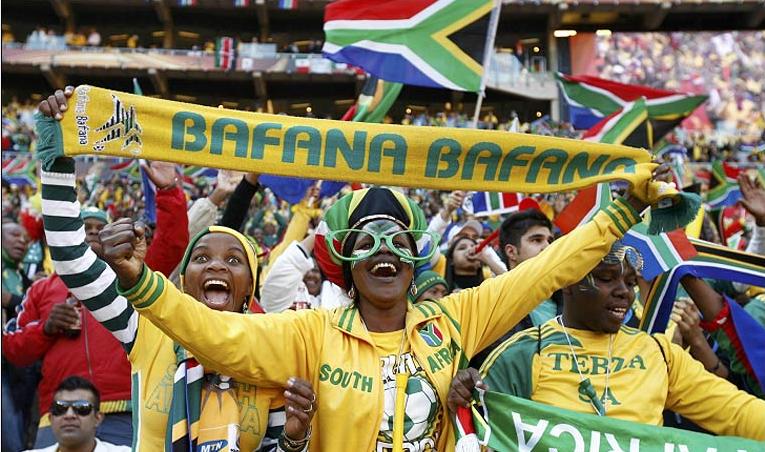
The papers tomorrow will probably use words such as ‘incredible’ and ‘impressive’ to describe the opening ceremony of the 2010 World Cup. I however, beg to differ. It was tedious and almost predictable in some places. Whilst it’s always nice to see a nation’s demonstration of its culture in sporting ceremonies, World Cup openers have become routine events where as many pop stars, musicians and children from the nation in question are shoved in to produce an over bulging ritual that simply tries too hard. I suppose my own standards were pretty high having watched the immensely impressive, yet hugely expensive, opening ceremony of the Beijing Olympics two years ago. I don’t think we will be witnessing a ceremony better than that for many years to come.


That said, it was rather nice to finally see a highly criticized country prove to the world that they could pull it off. It was like watching the end of those TV shows where fat, ugly people are put through a makeover and surgery and finally revealed to their friends as this transformed and somewhat attractive individual. Well done South Africa and well done Africa.


In terms of the football, the quality has been poor so far. The opening match between South Africa and Mexico was average at best bar a stunning goal from the hosts. France against Uruguay was even worse. Still, it was the first day and group A was never really going to set the tournament on fire. I am sure that in the next few days, we will be watching edge-of-our-seat matches where grown men will readily admit to messing their pants after witnessing a goal scored using immense skill and finesse.


And one also hopes that come 9:15pm tomorrow, we will be cheering an England win over those loud mouth Yanks.


Enjoy the world cup ladies and gents :-)

Wednesday, 19 May 2010

My Jekyll and Hyde Attitude Towards the World Cup


With the dust settling after all the recent British political fervor involving a coalition relationship between two unlikely individuals, I have decided to turn my attention towards the greatest sporting event on earth. Yes, the World Cup is only a few weeks away and I can already feel the atmosphere building in this country like a volcanic ash cloud creeping into the airspace.

What I love about the World Cup is the fact it’s the only time this self depreciating, self-hating country actually binds together and experiences some form of patriotic pride. It’s the only time the fault-finding English forget about the unpredictable weather, the badly paved streets, and the apparent degradation of society driven by those individuals we call chavs. It’s one of the few periods where a white English person can fly a St George’s flag without fear of being labeled a right wing racist – although this has never been a problem for myself being of an oriental disposition.

Without sounding too much like a representative of FIFA, I have to say I love the World Cup fever. I love seeing everyone walking around wearing their England tops and the cars driving past with the St George’s flags attached to the windows. I love how the country is gripped when the national team plays their matches and the joy that ensues when we score. I love getting drunk and singing the England chants with friends and complete strangers at the pub. No other event can come close to bringing this nation together. Not the Olympics, not even St George’s day.


Yet, at the same time, I also experience Jekyll and Hyde syndrome whenever a World Cup comes around. At times, the grumpy old man within me rears his ugly, wrinkled head. The main issue at stake is the fact I dislike how all these individuals who normally take no interest in football suddenly become experts at the sport – not least those women who suddenly feel they are ‘in with the lads’ by wearing their England top, drinking pints and screeching the chants in the pub. And then they tell you their favourite player is the one with the nicest legs and that they like the French team because their kit is pretty.

Groan.

And for god’s sake, stop asking about Beckham. He’s injured, past it and has no future left in the national team. Additionally, when the World Cup is over, these same people tell you that it’s just a game and question why we follow the sport so religiously. Unbelievable.

It is a difficult tension between two personalities that I have to overcome, but ultimately (I’m glad to say), the patriotic drunk always wins.


As for England’s chances, I have to say despite the controversies involving certain players, the Football Association and even the manager, we have the best chance of winning the World Cup in years. Even more so then 4 years ago with the so called ‘Golden Generation’ and a clueless, balding Swede.

Our manager, Italian he may be, is the best manager the team has had since Alf Ramsey. A disciplinarian, a tactician and a maker of men. Unlike the attack-at-all-costs style of the Premier League, international football is significantly more measured in its method of play and requires a lot more restraint and a more cultured approach towards the game – something which the national team has failed to do for many years. Fabio Capello has finally stamped upon the England team a more international style of passing the ball short and keeping it; rather than hoof it up to the big man at every opportunity. He’s got the best out of star player Wayne Rooney and most importantly, he’s got the team playing with confidence after years of ego-battering underachievement.

I suppose then, that my final words to this introduction to the World Cup are ones of hope and encouragement. Let’s unite as a nation, let’s get behind the lads and let’s believe we can do it.

Sunday, 2 May 2010

Tee Total Time Up


My challenge to go without alcohol for a month was finally completed yesterday and celebrated, appropriately (or perhaps quite inappropriately), with a drink. As I gulped the bitter sweet amber nectar out of the strangely comforting pint glass (which I have sorely missed) at the Captain’s Cabin in central London, I reflected upon what I have achieved.


In the grand scheme of things, one month’s abstinence from alcohol is nothing. Some people renounce alcohol for the rest of their lives whilst others relinquish consuming meat. Some even sacrifice all sex related acts for the sake of religious leadership - although a few do break this and get caught up in a tangled web of controversy involving under age individuals [cough Catholic Church].


But as a personal challenge, this was a commendable achievement. For a month, I could not reach for a beer at home when I was bored or depressed. I also had to contain my alcoholic appetite whenever I went out with people to bars or pubs. Whilst I was noticeably more quiet in social situations, I was however more sensible and measured with the way I conducted myself. Rather than my conversations descending into drunken laddish banter (often perceived as rude and incomprehensible to those around us) I maintained a composed and I daresay more mature way of conversing with other individuals.


However, with new acquaintances I was markedly more self conscious in my demeanour and I’m quite certain a fair few people picked up on this. This was a side of me I have been hiding with alcohol for a very long time.


As I progressed through I month, I realized I was replacing alcohol consumption with playing football. Any kick about that I was invited to, I would attend. Although already part of an 11-a-side team, I also joined a 5-a-side Power League team as well. My sessions in our home gym also intensified and became more frequent as I no longer had days where I was too hungover to get off my arse to lift weights. I felt as though I was more focused on achieving targets I set myself. As a result of all this, I feel as fit as a fiddle.


Furthermore, my bowel pains and headaches also disappeared and I no longer got heart palpitations. Additionally, my bank account suffered a lot less although it was brought back to its knees last night at the pub.


So have I have changed after this one month self-denial of alcohol? Well, a complete transformation is out of the question. Alcohol will always form the core of my social life. However I will endeavour to make changes to the way I approach it. Restraining myself from drinking it by myself when I’m sat in front of the television or computer. Spending a more sensible amount on nights out and aiming to not to get as ludicrously intoxicated as I have done in the past, and instead, focusing on trying to speak to people more sensibly.


To say I cannot live without alcohol would be a pathetic statement to make. However, the enjoyment that I have experienced whilst under its spell has been memorable and I foresee many more years of drinking, although less frequently and more perhaps more prudently, to come.